Cognitive dissonance theory
Contents
- Overview
- The causes of cognitive dissonance, and why it is accelerating
- The clash with the self on display on social media (the paradox of a hyperconnected society)
- The structural contradiction of a performance-driven society (the illusion of self-realization)
- The demand for anonymity and multiple personas (rapid urbanization)
- Information overload and the collapse of values
- Why people keep wearing masks and sinking into the swamp of cognitive dissonance, even though masks drain their energy and bring stress and pain
- Instant dopamine rewards and delayed pain
- A primal fear of isolation (an evolutionary-psychology view, ref. Collective Illusions | Todd Rose)
- The mask arms race and relative deprivation
- Sunk costs and identifying with the mask
- Breaking off this insane mask arms race
- Masks past and present
- How to break off this crazy mask arms race
- Someone has to do it
- Taking advantage of the cognitive-dissonance society (how the psychological deficits of modern society feed into huge flows of capital and industry)
- The premiumization of emotional sanctuaries (Emotional Sanctuary)
- The longing for a perfectly controlled relationship that cannot hurt you
- Authenticity itself as a high-value-added product
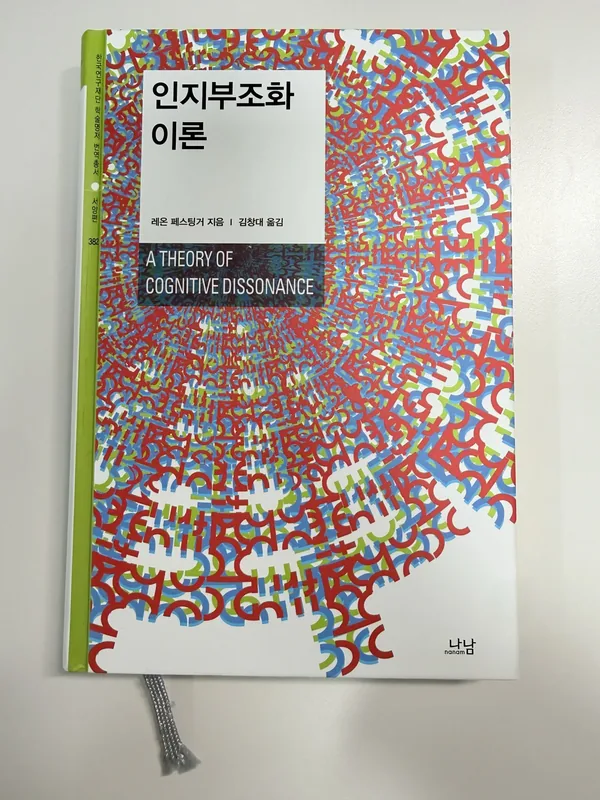
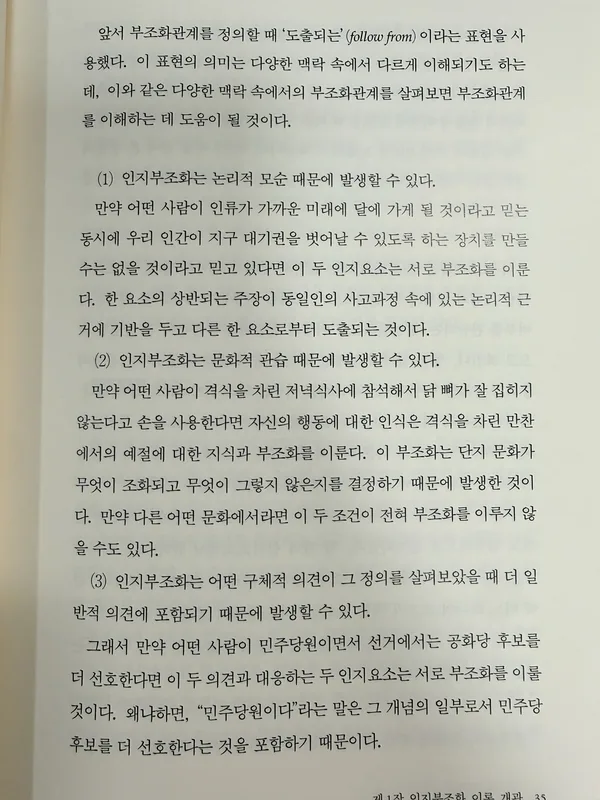
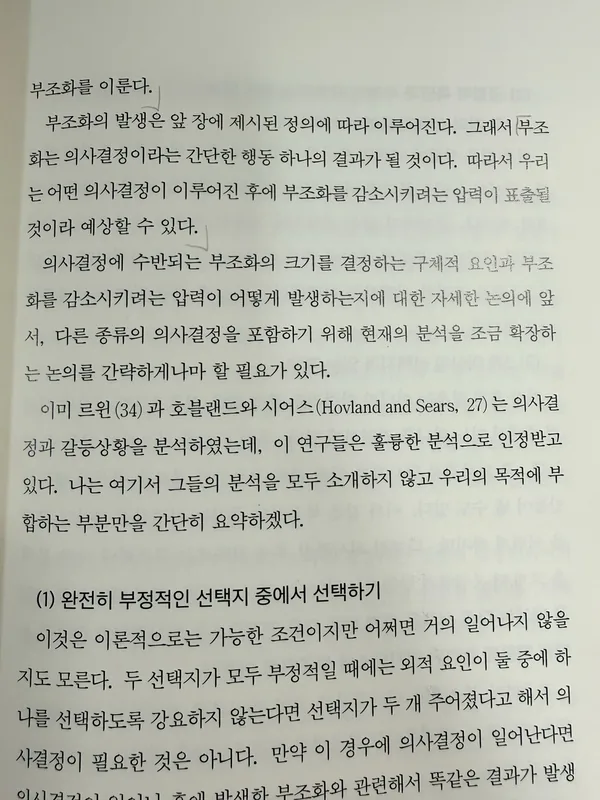
The further I go, the more often I run into people steeped in cognitive dissonance, so I looked into it to understand them as best I can. To understand it, I found the book “A Theory of Cognitive Dissonance | Leon Festinger” at Kyobo Books and made the hefty investment of 22,000 won. Whether my brain stats are too low or the translation is just crap, I can’t say, but for the parts I still didn’t get after reading the book I got help from Gemini, and I tried to understand it as best I could based on the books I’ve read so far.
Of course, what I mean is that I’m trying to “understand” people caught up in cognitive dissonance, self-objectification and impostor syndrome (literally “mask syndrome” in Korean); I have absolutely no intention of agreeing with their excuses or self-justifications. People who wear several masks and switch between them as the situation calls for usually package that as social skill, justify it to themselves, and even spread it to the people around them, all to protect the effort and the years they spent conducting themselves so desperately that way, and not only do I have not a shred of sympathy for that, but the more cases there are like mine, of people who blend into working life perfectly well without wearing a mask, the weaker their claim and logic that “you have to wear a mask to survive in society, that’s what being mature is” inevitably becomes, and to someone like me it is neither persuasive nor relatable at all.
Anyway, let me be clear: what I’m looking into is the desperate struggle of people caught up in cognitive dissonance, self-objectification and impostor syndrome, and why that is the most they can do, and the most they could have done.
Rather than working to build the stamina to create, manage and maintain multiple personalities, I will put more energy into managing myself and, when I have room to spare, helping the people around me, and that is what I’m doing. In the end, creating and managing multiple personalities uses up a considerable amount of mental stress and stamina, so if your stamina can’t back it up, it’s only a matter of time before the mask comes off. And of course, the side effects when the mask comes off hit twice as hard as they would if you had lived without one.
Overview
First proposed by the American psychologist Leon Festinger, this concept refers to the intense psychological discomfort that arises when two or more of a person’s beliefs, values or behaviors contradict each other. In the past it arose mainly in particular ethical dilemmas, but for people today, the very structure of everyday life is designed to produce cognitive dissonance.
The causes of cognitive dissonance, and why it is accelerating
The clash with the self on display on social media (the paradox of a hyperconnected society)
Social media like Instagram is a giant factory that mass-produces cognitive dissonance. In the past, the gap between people’s real lives and the lives they showed was not large. Now, though, people have to carry two selves at once: the thoroughly edited and retouched “perfect me online” and the tired, imperfect “me in real life.”
- The gap between belief and reality: On the outside you display lavish spending and happiness, but inside, a depressing, crappy (real) situation keeps repeating. The brain can’t resolve this huge contradiction and falls into chronic stress and a state of cognitive dissonance.
The structural contradiction of a performance-driven society (the illusion of self-realization)
Modern capitalist society goes beyond simply demanding labor; it even forces emotional stirrings on people: “Love your work,” “Have passion,” “Show you mean it.” Since simply doing the job well (performance) no longer helps much in the competition (differentiation), it now forces emotional stirrings too: feelings, character, sincerity.
- Forced emotion: In reality you’re forcing yourself to work in order to survive, yet on the outside you have to pretend you’re devoted to the company and realizing yourself. The inner truth, “I hate this job,” and the outward behavior, “I’m professionally immersed in this job,” collide head-on every day and produce serious cognitive dissonance. As the philosopher Byung-Chul Han put it in The Burnout Society, the contradiction of exploiting yourself while having to believe it is self-realization is what makes people today sick.
The demand for anonymity and multiple personas (rapid urbanization)
Rapid urbanization pushed people out into a vast sea of anonymity. In traditional communities, an individual’s identity as “me” stayed relatively single and consistent.
- Fragmented identity: But individuals today have a different face at work, on social media, in front of their family and when they’re alone. In the process of putting on and taking off these fragmented personas to suit the situation, a fundamental cognitive dissonance arises: “Who on earth is the real me?”
Information overload and the collapse of values
People today are exposed to thousands of conflicting pieces of information and values every day. Small contradictions are scattered all through daily life, like the gap between believing “we must protect the environment” and ordering convenient “delivery food” right now. Too much information and too many choices paradoxically make it hard for our actions and beliefs to line up, and the small cognitive dissonances this creates pile up and lead to chronic fatigue.
Why people keep wearing masks and sinking into the swamp of cognitive dissonance, even though masks drain their energy and bring stress and pain
Instant dopamine rewards and delayed pain
When you display a carefully crafted self (a mask) on social media like Instagram, you get a sure, instant pleasure (dopamine) in the form of “likes.” The mental fatigue and cognitive dissonance that build up from acting out a fake self, on the other hand, are a delayed pain that slowly eats away at your soul. The human brain is far more vulnerable to a strong reward right in front of it than to pain in the distant future. So even while knowing rationally that it’s exhausting, people get addicted to the sweetness of that instant social approval and attention and keep readjusting their masks.
A primal fear of isolation (an evolutionary-psychology view, ref. Collective Illusions | Todd Rose)
Humans are social animals that evolved to be unable to survive once separated from the group. In modern society, taking off your mask is unconsciously taken to mean leaving the mainstream group, in other words social death. In spaces like social media or a cutthroat workplace, where everyone wears a perfect, happy mask, being the only one to show a tired, shabby real face feels like more than enormous courage: it feels like a threat to survival. So even when their stamina hits bottom, people wear masks so as not to fall behind or be left out of the group.
The mask arms race and relative deprivation
Modern society is caught in a kind of mask arms race. Once you mistake other people’s masks (the perfect vacation, the successful career, the happy relationship) for their truth, your own reality looks endlessly shabby. To survive amid this enormous relative deprivation, people build thicker, flashier masks so as not to fall behind others. Because taking off your own mask feels like losing the competition, everyone is exhausted, yet nobody can take theirs off first; they’re trapped in a Prisoner’s Dilemma.
Sunk costs and identifying with the mask
Once you’ve spent a long time carefully building an impressive persona, a sunk cost builds up in that mask: the social reputation and relationships attached to it. A fear sets in that the moment you throw off the mask, the people who loved that fake self and the status you built up will all come crashing down. Later, as the line between the real you and the masked you blurs, people reach the point of mistakenly believing they are only worth something while they’re wearing the mask. Having entrusted their self-esteem to a fake self, they can’t take it off even if they want to.
In the end, people wear masks even at the cost of their stamina because society forces them into mistaking it for “the most rational survival strategy” an individual can choose in a society gone mad.
Breaking off this insane mask arms race
Masks past and present
- The survival mask of the past: In traditional society, the mask was strictly a matter of status and saving face. You wore the mask that society or your class forced on you, and if you conformed within that frame without standing out, you could get by and survive. You had no need to prove for yourself what kind of person you were
- The proof mask of today: The tragedy of today, by contrast, is that where the class system disappeared, in the name of “freedom,” we now live in an age where each person has to mold their own mask and prove it. Everyone has been forced onto a vast stage where they must prove for themselves “How special, successful and flawless a life am I living?”
How to break off this crazy mask arms race
- Solidarity in vulnerability instead of perfection: Lately there are more and more cases of people who, instead of a perfect mask, honestly show their depression, burnout and failures, and win stronger support and solidarity for it. The moment a genuine sense of “So it’s not just me who’s struggling” forms, the flashy mask loses its power.
- Digital detox and the rise of JOMO: Beyond the FOMO (fear of missing out) people feel watching others’ flashy masks, a movement is emerging that pursues JOMO (Joy Of Missing Out): voluntarily disconnecting and getting out from under other people’s gaze.
- Deliberate energy minimalism: A way of living that, instead of maintaining multiple personas to look like a good person to everyone, concentrates its energy only on the very few relationships that recognize your true heart and on your own whole inner self.
Someone has to do it
The surest way to end this crazy competition, paradoxically, is for someone to declare disarmament first. When everyone is watching everyone else and painting their masks on ever thicker, the courage of just one person who shows their bare face, saying “I’m getting out of this exhausting, meaningless game,” gives the people around them an enormous sense of liberation that lets them take off their masks too.
Taking advantage of the cognitive-dissonance society (how the psychological deficits of modern society feed into huge flows of capital and industry)
There is also a way to take advantage of a society riddled with cognitive dissonance instead of bothering to try to change it. The longer a cognitive-dissonance society lasts and the more advanced it becomes, the more the idol and entertainment businesses can grow. In a society where cognitive dissonance is rampant, the scarcity of a time and place where you can show your true feelings becomes ever more valuable, and so will the supply aimed at people worn out by cognitive dissonance.
The premiumization of emotional sanctuaries (Emotional Sanctuary)
In daily life and at work you have to control your emotions thoroughly and act out a persona. Showing raw emotions such as anger, sadness or blind passion comes with social punishment and risk. But the space of an idol concert or a fandom is a rare emotional safe zone, where no matter what passion and cheers I pour out, I am never criticized. The greater the pressure of the cognitive dissonance suppressed in daily life, the more willing people become to pay huge sums for a time and place where they can let that pressure out. The absolute scarcity of places to pour out your true feelings becomes the very engine of the industry’s explosive growth.
The longing for a perfectly controlled relationship that cannot hurt you
Real-world relationships are a continuous series of interactions and inevitably come with misunderstandings, conflict and emotional drain (contradictions colliding). People today, their fatigue at its peak, no longer have the capacity to form and maintain complicated real-world relationships. The relationship between a fan and an idol (a parasocial relationship, Parasocial Interaction), by contrast, is thoroughly controlled and safe. Even if I give unconditional affection, there’s no chance of running into real conflict or being rejected. This perfect safety net, knowing I won’t get hurt even if I project 100% of my true feelings, becomes the most attractive substitute for people worn out by cognitive dissonance.
Authenticity itself as a high-value-added product
If the entertainment of the past simply sold performances of song and dance, the entertainment of the future will evolve into an industry that sells authenticity and narrative through and through. The more the world is full of masks and pretense, the more people paradoxically crave the real thing. The fleeting sincerity an idol shows while sweating on a planned stage, the close bond between the members, the narrative of growing by overcoming hardship: these are precious emotions that people today find hard to come by in daily life. The reason the private messaging services that feel like one-on-one conversations between idols and fans (Bubble, Weverse and the like) have recently been making huge revenues is that they have finely turned this sense of genuine connection into a product.
The entertainment industry looks set to keep expanding its size and influence without end, absorbing even the role of a kind of alternative psychotherapy or modern-day religion that fills people’s depleted inner lives and lowers the pressure of cognitive dissonance. What we need to be careful about here, though, is that if people gradually give up on exhausting real-world relationships and lean only on “safe sincerity inside entertainment,” which can be had only by paying money, our real society could end up even more fragmented and isolated.
You can easily see Koreans’ love of masks in all kinds of media. On Culinary Class Wars season 2, Choi Kang-rok won a lot of love for his timid, self-effacing charm despite his outstanding cooking skills, while Lee Ha-seong (the “Cooking Monster”), quite apart from his outstanding cooking skills, got a lot of needless hate comments because he showed a confident self all his own.
People say they like sincerity, authenticity and rawness more than pretense. But don’t be fooled by that. People want you to show your raw side within their own lines, inside their own box; show a raw side that stands out beyond that, or is more than they can handle, and they get uncomfortable and dislike it. They want to see a raw side that is controlled and stays within the standard; they never want to see a side that is literally, truly raw.
Most people live hard lives behind masks. But when they see people living comfortably without any mask at all, they get uncomfortable, envious and jealous. Admiration is partial and fleeting.
Keep in mind that most people put on several masks every day and live hard lives.