I want to work with someone who brings out the genuine side of me
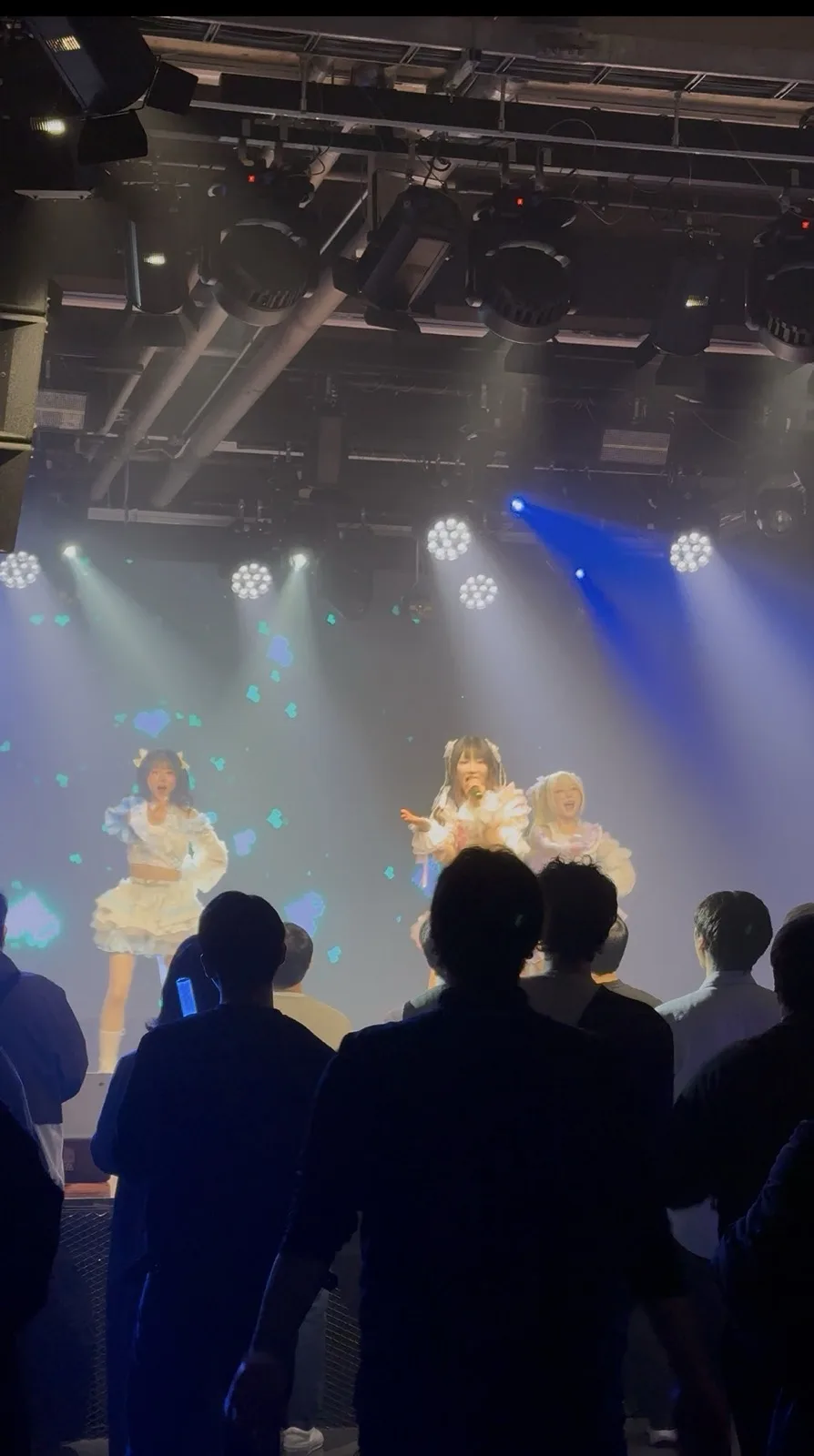
Rambling on and on after coming back from a genba (a live idol show)
At a concert, the idols don’t truly love the fans, but the fans cheer for the idols out of a heart that truly loves and adores them, and in a way the idols are lying to the fans while the fans give the idols their all, and I found myself questioning my own feelings: why does a space where pretense and truth coexist and collide like this feel so interesting and attractive?
To be honest, I couldn’t pin down exactly in what sense this feeling gives me catharsis, but I was able to sort it out to some extent.
A space where pretense (staged fantasy) and truth (pure emotion) collide and fuse has a peculiar charm that words can’t describe. I wondered how a space where thoroughly planned fantasy and raw sincerity coexist could give off such explosive energy and captivate people.
Real-world relationships are complicated and unpredictable, and there’s always the risk of getting hurt when you give someone your all and they don’t give the same back. But the relationship between an idol and their fans has a breakwater: thoroughly planned pretense (the performance on stage). Because fans unconsciously know this relationship is controlled, they can actually pour out, far more safely than in real life and without fear of being hurt, all of their sincerity and passion. (Paradoxically, the pretense is what sets the sincerity free.)
In literature and film there’s a concept called the willing suspension of disbelief. It means knowing a movie is fake yet believing it’s real just for that moment and shedding tears. Deep down, fans also know that an idol’s “愛してる” (“I love you”) isn’t aimed at them as individuals. But the moment they step into that space, people agree to willingly take part in that beautiful lie. Because even if what happens on stage is staged, my feelings, my heart pounding and being comforted as I watch it, are 100% real.
A concert hall is the crystallization of cold, meticulously calculated capital and planning. It’s an artificial realm where everything down to the lighting, the movement, the talk between songs and every single expression is precisely crafted. But the cheers, tears and frenzy pouring out of the fans below the stage are raw emotions, completely uncontrolled. When the most refined pretense and the most explosive truth collide head-on in one space, that extreme contrast creates an enormous catharsis and a strange aesthetic that you can never experience in everyday life.
In a way, it’s less that the idols are lying one-sidedly and more that they’re staging a huge vessel to hold the fans’ sincerity. Even if it started out as pretense, the hot air and the sense of bond filling that concert hall become one huge truth.
That’s why idols’ ad-libs stand out all the more
Because 99% of it is a perfect stage, thoroughly controlled and calculated, the 1% of uncontrolled sincerity that pops out unexpectedly (an ad-lib, a mistake, tears shed when emotions well up) shines all the brighter. Emotions that could easily go numb in an everyday life where only raw feelings go back and forth get a powerful spotlight of truth, thanks to the dark backdrop of pretense.
On top of that, you feel an intense bond, a sense that you’re connecting with a human being who feels and reacts just like you. (Because sometimes vulnerability opens people’s hearts more deeply than perfection does.)
But the workplace is also a space where pretense and sincerity coexist, yet it’s hard to see it as a place that gives you catharsis or is interesting.
The decisive difference between the two spaces is that their rules and purposes are complete opposites.
Pretense at work is emotional labor forced on you for your own survival (salary, career, performance reviews). Getting on your boss’s good side and loyalty to the company are not choices but closer to duties, so far from catharsis, they only give you an oppressive feeling that drains your energy.
Also, an idol’s pretense is designed to give fans the greatest happiness and fantasy, but pretense at work is a defense mechanism for avoiding conflict and functioning smoothly as a cog in the organization. At work, sincerity comes back to bite you the moment it shows. Truths like anger at your boss, boredom with your work, or honest but painful criticism get you judged as unprofessional. Because it’s a space where you’re safe only if you hide your sincerity, its appeal can’t help but be halved.
An idol’s pretense, just like pretense at work, is emotional labor that each idol performs in order to survive, but there’s a big difference in how the consumers of that emotional labor take it. At work, when a colleague or partner smiles kindly at me, I don’t deeply mistake it or expect that “that person must really like me.” Both sides are all too aware of the reality that they’re acting for the sake of working life.
But fans at a concert, even while knowing rationally that the idols’ pretense is their job, want to lose themselves in the fantasy just for that moment. Because it’s a space where an agreement has been reached, “Give me a perfect, beautiful lie (fantasy),” that pretense becomes an object of passionate consumption instead of criticism.
So if, in the end, all of us are pretending in order to survive, is pretense actually right?
To give the conclusion first: pretense and sincerity aren’t a moral question of good and evil but tools people use to get through life without getting hurt.
Pretense is the minimum line of defense for protecting your own fragile heart and keeping you from clashing with others unnecessarily. Raw, unprocessed sincerity is so heavy and sharp that it can sometimes become a sharp weapon, turning into violence against others and wounding them deeply.
Because a lie is the greatest love
To tell someone a perfect lie, you have to watch them constantly and figure out what they want. You have to hide your own mood and feelings completely and craft expressions and words solely to make the other person happy. It’s not a selfish lie to protect myself but an altruistic lie that pours all my energy into not breaking “the most beautiful dream” the fans want to see. It’s a resolve to willingly become a perfect performer for others’ happiness, even at the cost of whittling away your own self, and that in itself is already enormous devotion and love.
In the story, Ai Hoshino fears her own empty inner self, which doesn’t know the essential feeling of love. So she keeps saying the lie “I love my fans,” desperately hoping that someday this lie will become the real truth. She uses lies not merely as deception but as stepping stones toward sincerity. It’s the belief that even without perfect sincerity in her heart, if she imitates it and keeps saying “I love you,” at some point that feeling will truly bloom inside her. In other words, lying is the very best effort Ai Hoshino can make to reach sincerity. If she carries that lie to her grave, in the end it is no different from the biggest, heaviest truth.